

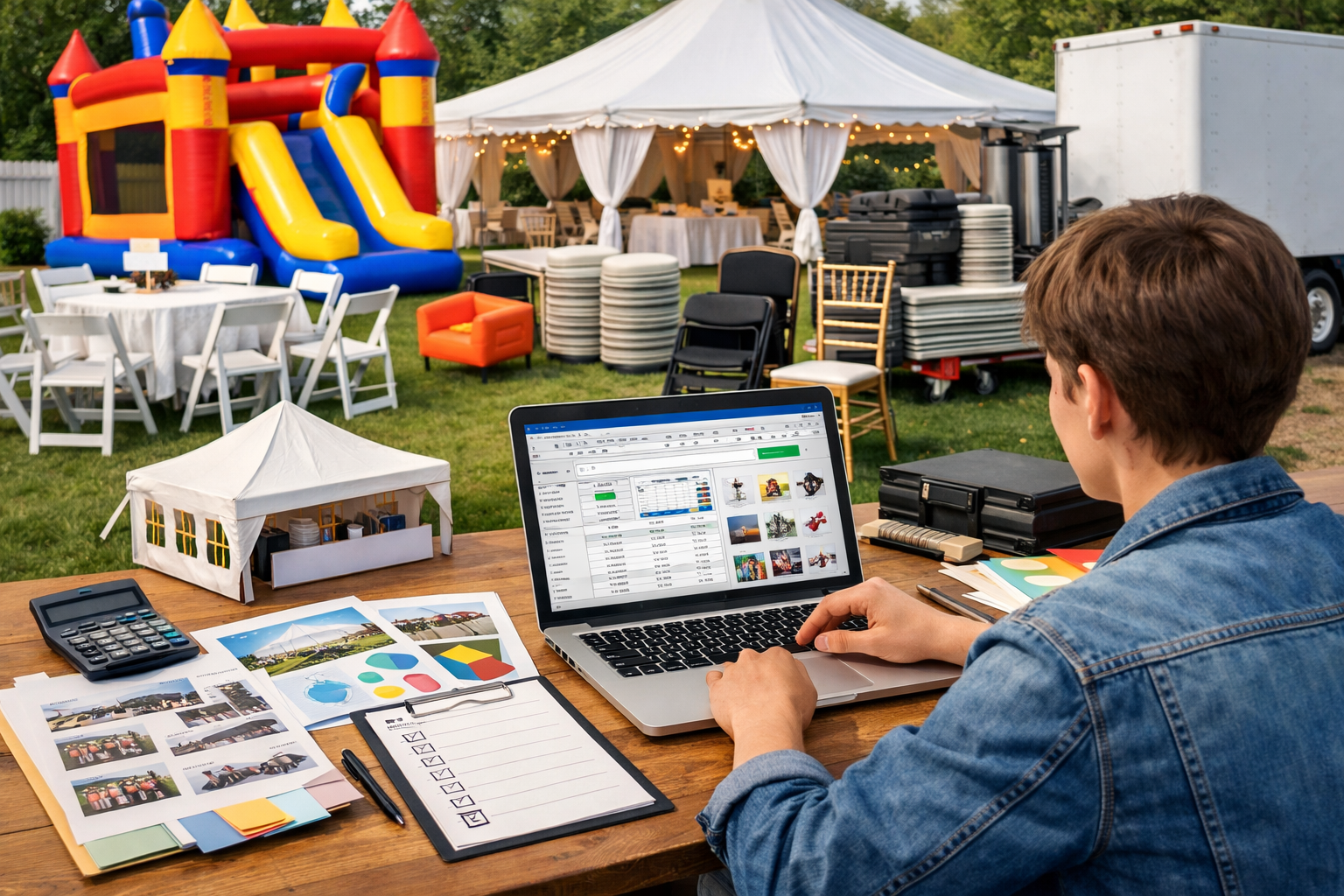
Starting a party rental business may look simple from the outside, with tables, tents, inflatables, or decor rented for events. But behind every successful rental company is a system built on planning, logistics, inventory control, customer experience, and smart operations. The good news? You do NOT need years of industry experience to build a successful party rental business.
Many thriving rental companies began with zero background in events. What they did have was a clear system, strong processes, and the right tools to manage growth from day one. This guide breaks down exactly how to build a party rental business from scratch, including planning, setup, operations, marketing, and scaling, so you can start confidently even if you’re new to the industry. Whether you want to serve birthday parties, corporate events, weddings, or large-scale festivals, this roadmap gives you the structure professionals use.
Understanding What a Party Rental Business Actually Does
Before launching, it’s important to understand that party rentals are not just about equipment. They are about solving event problems. Customers don’t rent items; they rent experiences.
A strong party rental business provides:
- Equipment like tents, inflatables, tables, chairs, lighting, staging, or decor
- Delivery and pickup logistics
- Set up and teardown services
- Scheduling coordination
- Event consultation support
Many beginners focus only on buying products. Experienced operators focus on systems that make those products easy to manage. This is why modern rental companies rely on centralized management platforms that organize inventory, track availability, manage deliveries, and streamline bookings, preventing chaos as demand grows.
Why Zero Experience Can Actually Be an Advantage?
New entrepreneurs often believe they need industry expertise before starting. In reality, beginning without assumptions allows you to build smarter processes from the start.
Advantages beginners have:
- Willingness to adopt modern technology early
- Ability to build efficient workflows instead of copying outdated methods
- Fresh branding and marketing approaches
- Flexibility to test niche markets quickly
Instead of learning old habits and fixing them later, you can design a scalable operation from day one.
Step 1: Choose Your Rental Niche and Market Focus
Trying to offer everything immediately is one of the biggest mistakes beginners make.
Start by identifying your primary niche based on:
- Local demand
- Budget limitations
- Storage availability
- Operational complexity
- Popular niches include:
- Backyard and Birthday Parties
Inflatables, bounce houses, concession machines, and kids’ party equipment often generate quick bookings and repeat customers.
Weddings and Formal Events
Higher-value bookings with tents, decor, lighting, linens, and staging.
Corporate and Community Events
Large-scale rentals with long-term clients, often involving structured scheduling and logistics. Starting with a focused category helps you refine processes and grow more efficiently.
Step 2: Build a Strong Business Foundation
Even with zero experience, professional structure matters.
Key elements include:
- Business registration and local licensing
- Insurance coverage (especially liability insurance)
- Rental contracts and policies
- Payment processing setup
- Clear terms protect both your business and your customers.
Professional documentation also increases trust. That’s something especially important when you’re new in the market.
Step 3: Start Small With High-Demand Inventory
Avoid over-investing early. Instead, focus on items that:
- Rent frequently
- Have manageable storage requirements
- Are easy to transport
- Deliver a strong return on investment
Examples:
- Folding tables and chairs
- Small tents
- Basic decor packages
- Popular inflatables
Track demand carefully and expand inventory based on real booking data rather than assumptions. A structured inventory system helps prevent double bookings and ensures accurate availability. This is something that becomes essential as your catalog grows.
Step 4: Create a Professional Booking Experience
Your booking process is often your first impression. Customers expect:
- Clear pricing
- Easy item selection
- Real-time availability
- Transparent delivery scheduling
- Manual systems like spreadsheets quickly become overwhelming.
Modern rental companies use centralized platforms that allow:
- Online browsing of products
- Automated quotes
- Inventory tracking
- Delivery route coordination
Tools that manage website inventory and scheduling reduce errors and allow you to focus on customer service instead of administrative work.
Step 5: Master Storage and Equipment Organization Early
Storage is one of the most overlooked areas for beginners. Yet, it directly affects efficiency and profitability.
Best practices include:
- Label all equipment clearly
- Separate cleaned items from used inventory
- Maintain maintenance checklists
- Use shelving and racks to maximize space
- Implement check-in and check-out tracking
Inflatables, tents, and mechanical equipment require careful handling to prevent damage and ensure safety. Efficient storage reduces loading time, improves team productivity, and minimizes lost inventory.
Step 6: Build Operational Systems Before You Grow
Growth without systems creates chaos. Create clear workflows for:
- Booking confirmation
- Equipment preparation
- Delivery scheduling
- On-site setup
- Post-event inspection
Delivery coordination becomes increasingly complex as your calendar fills. Using software that aligns bookings with delivery routes helps prevent missed appointments and double-scheduling. Operational consistency builds customer trust and makes scaling possible.
Step 7: Learn Pricing Strategies That Protect Profit
Many beginners underprice their services. Instead of guessing, calculate pricing based on:
- Equipment cost
- Maintenance expenses
- Labor time
- Transportation costs
- Storage overhead
Offer packages to simplify decision-making. Bundling items increases average order value while making your service easier to understand for customers.
Step 8: Create Quotes That Convert Into Bookings
Your quote is not just a price list; it’s a sales tool.
High-performing quotes include:
- Clear item descriptions
- Transparent fees
- Professional branding
- Optional add-ons
- Easy acceptance process
Automated quote systems reduce back-and-forth communication and help customers commit faster. Professional quoting also signals reliability, which matters greatly when customers are planning important events.
Step 9: Build Marketing That Generates Consistent Leads
Marketing doesn’t require massive budgets, but it does require strategy. Start with:
- Google Business Profile optimization
- Local SEO targeting event-related keywords
- High-quality images of setups
- Social media showcasing real events
- Partnerships with venues and planners
Consistency matters more than complexity. Show real experiences rather than staged promotions whenever possible.
Step 10: Deliver Customer Experiences That Drive Referrals
Word-of-mouth remains one of the strongest growth drivers.
Focus on:
- On-time delivery
- Professional communication
- Clean, well-maintained equipment
- Friendly setup teams
After events, request reviews and follow up with clients. Satisfied customers often return for future events or recommend your services to others.
Step 11: Scale Smart With Automation and Data
Once bookings increase, manual processes become bottlenecks.
Scaling successfully means:
- Tracking inventory utilization
- Monitoring delivery efficiency
- Identifying best-performing products
- Automating scheduling and reminders
Systems that combine inventory management, website integration, and delivery planning allow businesses to grow without increasing administrative workload. Data-driven decisions help you expand confidently rather than guessing.
From Beginner to Industry Professional: Building a Rental Business That Lasts
Starting a party rental business without experience is not only possible, but is increasingly common. Success comes from building structured systems early, focusing on customer experience, and using modern tools that simplify complex operations. When inventory, scheduling, and bookings work together seamlessly, you can spend less time managing logistics and more time growing your brand.
If you’re ready to build a rental business designed for long-term success, Party Rentify helps streamline website inventory management, product organization, and delivery scheduling so you can launch faster and scale smarter with confidence. Start building your future with Party Rentify today.


